ForgeDash
Business management software for trade and service businesses, built one vertical at a time. The first vertical, independent garages, is the working example below.
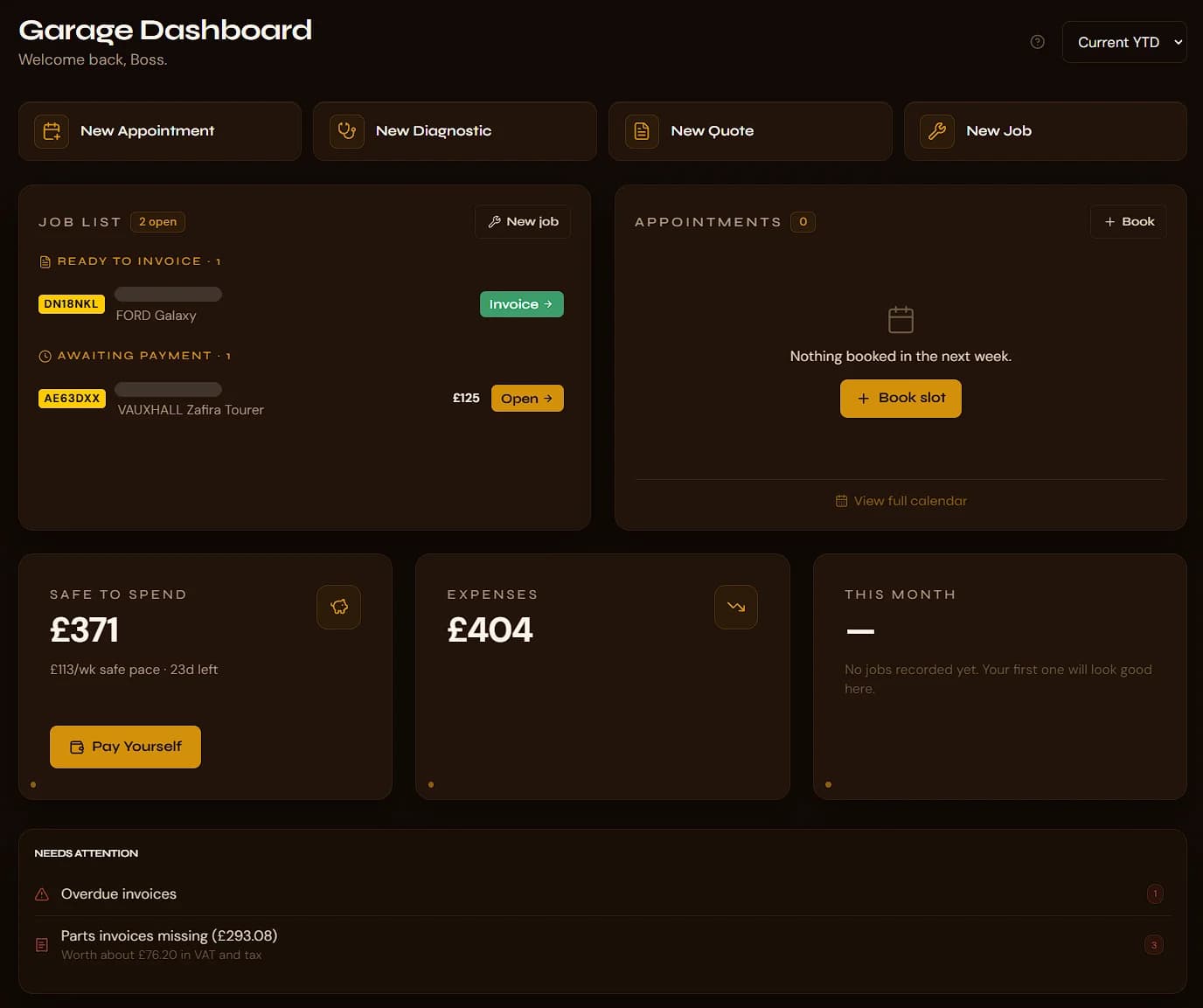
One job, five tools
A small garage runs on bookings, diagnostics, quotes, jobs, parts, invoices and tax. In most workshops those live in separate apps, paper and memory, and the same details get typed again at every step.
ForgeDash puts the whole job in one record. A booking becomes a diagnostic, the diagnostic becomes a quote, the quote becomes a job, and the finished job becomes an invoice. Nothing is typed twice.
- Booking
- Diagnostic
- Quote
- Job
- Invoice
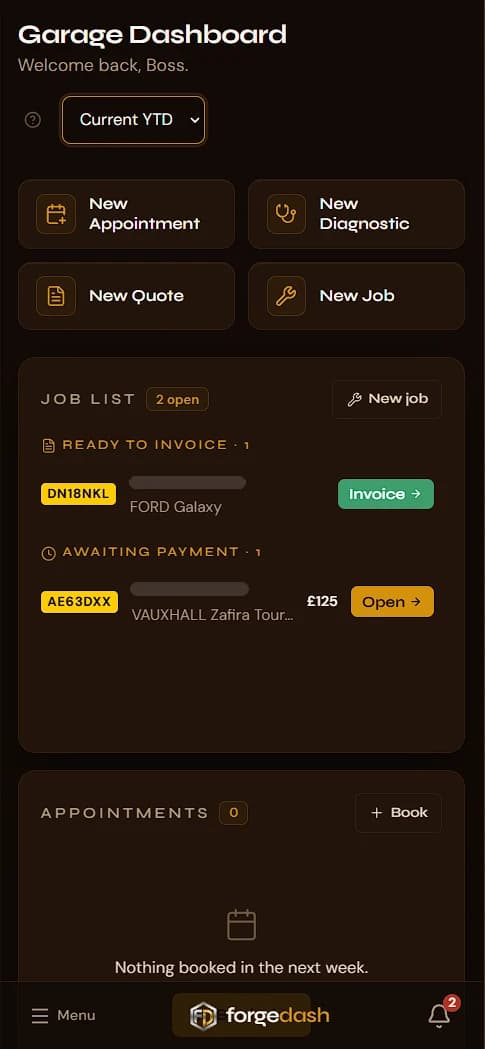
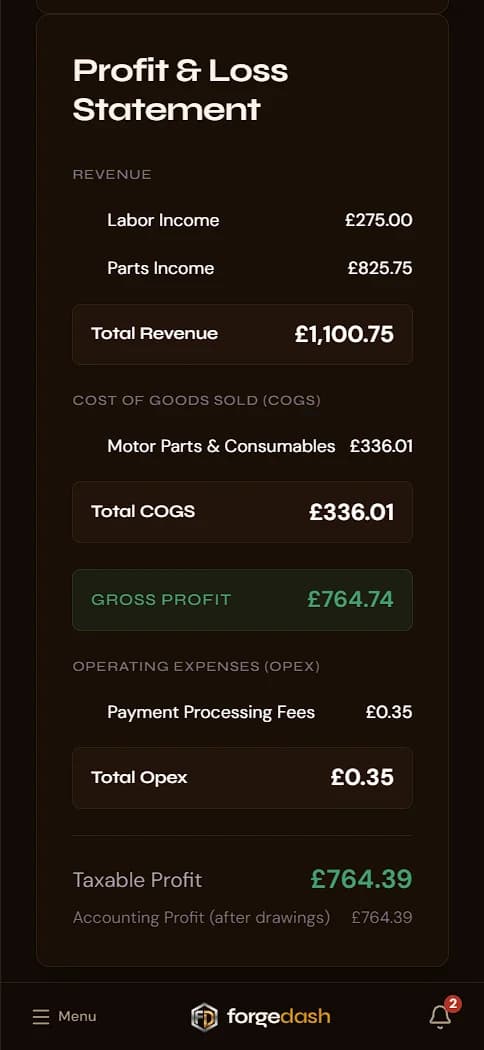
The business side, not just the workshop
Behind the workshop screens sit expenses, supplier accounts, payments and live reporting: a profit and loss statement and a real-time “safe to spend” figure that sets aside income tax, National Insurance and VAT, so an owner can see what is genuinely theirs.
How it’s built
- Sign-in
- Email and password, Google sign-in and passkeys.
- Data
- PostgreSQL on Supabase, with row-level security keeping each business’s data separate.
- Payments
- Stripe subscriptions for the product and Stripe Connect for customer payments. Invoices are emailed to customers.
- Automation
- Vehicle data lookups by registration, and an AI-assisted OCR pipeline for paperwork, run as Windmill workflows.
- Backend
- Deno edge functions alongside the database.
- Interface
- React and TypeScript, responsive from the workshop floor to the office.
- Hosting
- Self-hosted on Coolify, built, deployed and operated by the founder.
One platform, many trades
Garages are the first vertical, not the whole market. The longer-term plan is to bring the same foundations (customers, jobs, quotes, invoicing, payments and reporting) to other trades and service businesses. Those verticals are planned and not yet launched.
Where it is now
ForgeDash is pre-launch and in active development. It is our own product, designed, built and run by the founder, not commissioned client work. All business data in these screens is synthetic.
Have a workflow like this in your business?
Tell us how the work happens today and where it breaks.